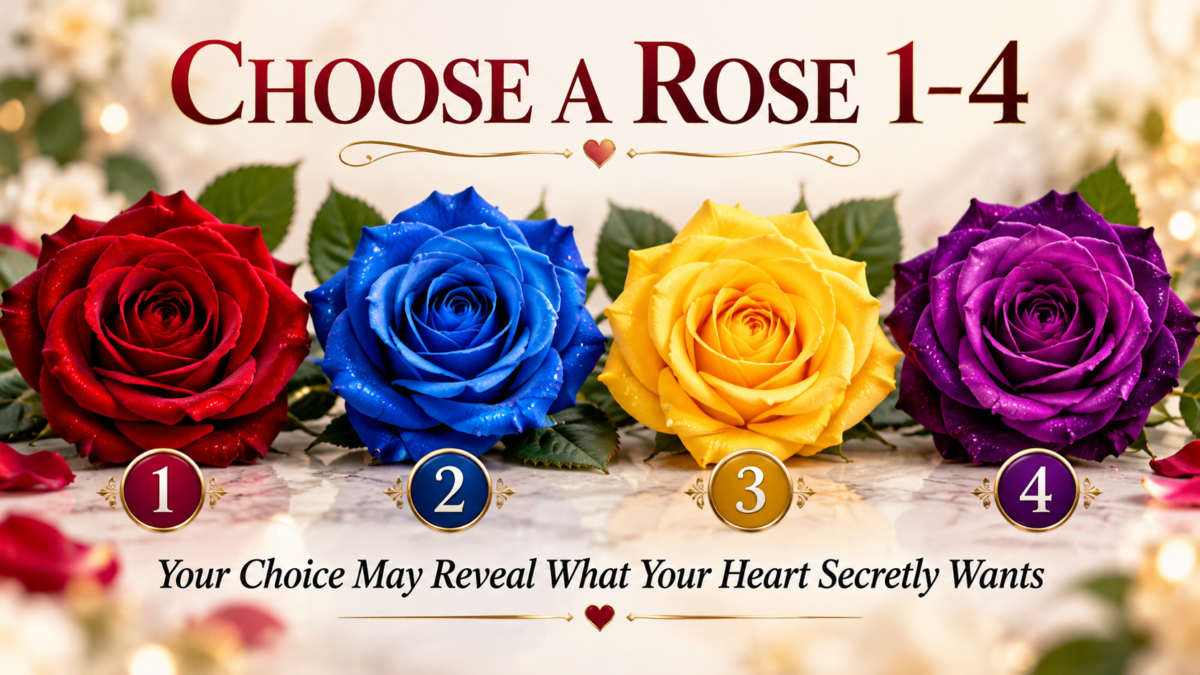
ROSE 4 — PURPLE: Your Heart May Be Searching for a Rare and Meaningful Connection
The purple rose has a distinctive appearance, and choosing it may reflect an interest in relationships that feel personal, authentic, and difficult to replace.
You may not develop strong feelings for people simply because they are attractive or because others consider them desirable.
Instead, you could be drawn to someone whose personality gradually reveals unexpected depth.
Perhaps they have unusual interests, a different way of seeing the world, or a sense of individuality that makes conversations feel genuinely memorable.
You may especially appreciate people who are comfortable being themselves rather than constantly changing their behavior to gain approval.
The purple rose can symbolize a desire for emotional intimacy that goes beyond surface-level attraction.
You may want to know what another person genuinely believes, what experiences shaped them, what they hope to build, and how they behave when there is nobody around to impress.
What You May Secretly Want in Love
One of your strongest romantic wishes may be to experience a relationship where both people can be deeply connected without losing their identities.
You may enjoy closeness, affection, and emotional vulnerability, but still need room for personal interests, friendships, ambitions, and time alone.
A partner who understands that balance may feel particularly attractive.
You probably do not want a relationship in which independence is constantly mistaken for rejection or where affection becomes a reason to control another person’s choices.
You may instead appreciate someone who chooses to spend time with you because they genuinely want to, not because they believe a relationship should eliminate every other part of their life.
For you, commitment may become more meaningful when it is freely given and supported by mutual respect.
The Relationship Pattern Worth Watching
The purple rose also offers an interesting reminder about mystery.
Someone who seems difficult to understand can sometimes appear more fascinating simply because there is so much you do not know about them.
You may find yourself attracted to their complexity, trying to understand what lies behind their silence, inconsistent behavior, or reluctance to reveal personal feelings.
However, mystery and emotional depth are not the same thing.
A meaningful connection should become clearer as trust develops. If months pass and you still have little understanding of another person’s intentions, their unpredictability may not be evidence of a special bond.
Authentic intimacy allows two people to become more comfortable and honest with each other over time.
If you are single, this rose may reflect an attraction to someone whose individuality initially surprises you. Give yourself time to learn whether their behavior is as dependable as their personality is interesting.
If you are already in a relationship, it could be a reminder to preserve both closeness and independence. Supporting one another’s ambitions, interests, and friendships can help the relationship grow without becoming restrictive.
Your rose’s message: Your heart may be searching for a connection that feels deeply personal — one where you can love someone fully without losing what makes either of you unique.
What If You Were Attracted to More Than One Rose?
Not everyone will have one obvious favorite.
You may have been torn between two colors, or perhaps you found yourself appreciating different qualities in each flower.
That is completely normal. Romantic preferences are rarely limited to one emotional need.
For example, someone attracted to both the red and blue roses may appreciate passionate romance while also wanting stimulating conversations and clear communication.
A preference for yellow and purple could symbolize a desire for a relationship that feels joyful and relaxed without sacrificing individuality or emotional depth.
Red and yellow together might reflect an interest in combining excitement with friendship, while blue and purple could represent the importance of intellectual understanding and personal independence.
These combinations do not have fixed psychological meanings. They simply offer another way to reflect on the qualities that currently matter to you.
Your Rose May Say More About Your Present Needs Than Your Future
What attracts you today may not be exactly what attracted you several years ago.
Experiences can change what people value in relationships. Someone who once prioritized excitement may now appreciate consistency. A person who used to focus on stability may discover that they need more playfulness, curiosity, or emotional openness.
That does not mean their personality has completely changed. It may simply mean they have learned more about what helps them feel fulfilled.
The red rose invites reflection on passion and loyalty. The blue rose highlights communication and intellectual connection. The yellow rose celebrates friendship and shared happiness, while the purple rose represents authenticity and emotional depth.
None of the four choices is better than the others.
The most useful question is not whether your chosen rose has correctly revealed a hidden secret. It is whether its description helps you recognize something you want to give more attention to in your relationships.
Perhaps you need clearer communication, more consistent affection, stronger boundaries, or simply more opportunities to enjoy being together.
Whatever your answer, a small moment of reflection can become the beginning of a meaningful conversation with yourself or someone you care about.
Disclaimer: This article is intended for entertainment and general self-reflection only. Choosing a rose or color is not a scientifically validated method of identifying personality traits, hidden emotions, relationship compatibility, or future romantic events. The interpretations above are symbolic prompts rather than psychological assessments or predictions.